Author Archives: admin

Vietnam: WFTU Working Women Asia Pacific meeting kicked off today, December 6th, with great success

The Working Women Asia Pacific Meeting kicked off today with great success in Vietnam, hosted by VGCL-Vietnam. Women trade unionists from every part of the Asia Pacific Region are taking part in the meeting anlysing the situation of working women in the region. The WFTU is represented by Anda Anastasaki, General Coordinator of the WFTU Central Offices.


OBSERVE NATIONAL PENSIONERS DAY ON 17-12-2017.

It was on 17th December, 1982, the Supreme Court chaired by Chief Justice Y.B.Chandrachood pronounced the historical verdict on D.S.Nakara’s case.  The judgment asserted and affirmed that pension is the right of an employee and not a bounty of the government. It also declared that there cannot be any discrimination in extending pensionary benefits on the basis of the date of retirement.  The judgment is consideres as the ‘Magna Karta ‘ of pensioners. December 17 is being observed as the National Pensioners Day.

CHQ requests all the AIBDPA units to observe the day in a befitting manner on 17-12-2017, jointly with other pensioners organisations, where ever possible.

ANDHRA CIRCLE EXECUTIVE COMMITTEE MEETING HELD AT VIJAYAWADA.

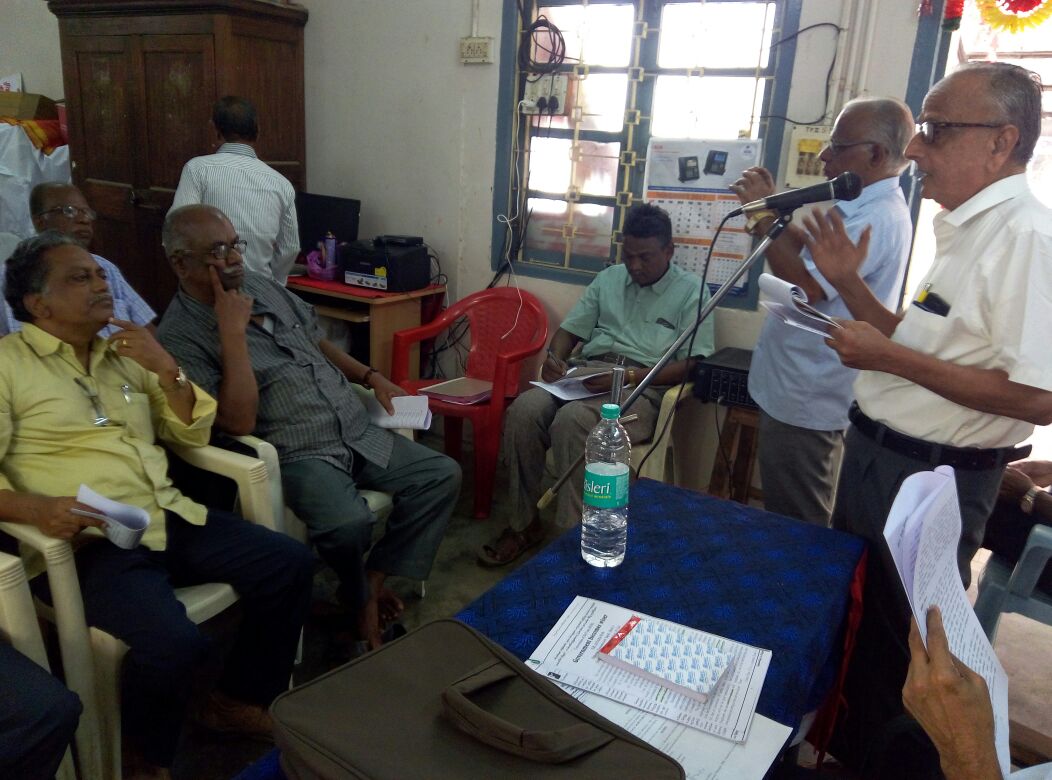
CEC meeting of AP Circle was held on 05.12.2017 at MB Vignanakendram Vijayawada, under the presidentship of Com. M. Yacob, Circle President.Com.P.Asokababu, Vice-President CHQ in his inaugural address enlightened the members about the present situation of BSNL, Pay revision, Pension revision etc., and the need to make ensuing programme of Dharna on 11.12.2017 and strike by All Unions and Associations of BSNL on 12th and 13th of December a grand success.The meeting is also addressed by Circle Advisor Com. V.Sambasiva Rao.Circle Secretary Com. K.S.C.Bose submitted the activities report and Circle Treasurer presented the financial report and both were approved by the CEC meeting. All the DSs and Circle Office bearers participated in the discussion.The meeting reviewed the organisational position in each district and resolved to strengthen the organisation and to make the future programmes successful.Com. C.J Shanmugam, ACS proposed vote of thanks

Image may contain: 2 people, people smiling, people sitting, people standing and indoor

Image may contain: 1 person, sitting and indoor

GANGTOK DISTRICT CONFERENCE HELD BEFITTINGLY.

Image may contain: 3 people

The Gangtok District Conference was held successfully with good participation on 02-12-2017. Com.S.K.Rai, District President controlled the proceedings. Coms. Dilip Das, Circle Vice President, A.K.Nanadan, ACS, R.K.Yadav, ACS, and T.K.Pradhan, DS, BSNLEU addressed the conference. The biennial report and audited accounts presented by the District Secretary and Treasurer were adopted after discussion.

Office berers were elected unanimously with Com.S.K.Rai (President), Lalu Rai (District Secretary) and Ramesh Rai (Treasurer)

BSNL RECHARGED- NEW STRATEGIES KEEP IT FIRMLY IN THE RACE DESPITE STIFF COMPETITION.

BSNL Recharged: New strategies keep it f...


Bharat Sanchar Nigam Limited (BSNL), which has long been under the weather, may finally be moving towards a much-awaited turnaround. That, at least, is what the company’s financial and operational metrics indicate. According to Anupam Srivastava, chairman and managing director, BSNL, the PSU is likely to post operating profits for the third consecutive year in 2016-17. Revenue from operations is expected to be Rs 287 billion, a marginal increase from the Rs 284 billion recorded in 2015-16. BSNL is currently computing its accounts for 2016-17. It has also managed to fend off any significant subscriber erosion threat following Reliance Jio Infocomm Limited’s (RJIL) entry into the sector last year. Interestingly, in August 2017, BSNL reported much higher subscriber additions than Bharti Airtel, Vodafone India and Idea Cellular. In fact, data traffic on BSNL has grown at a remarkable pace.

With its new-found confidence, the telecom PSU is taking on the increased competition in the sector  to stay in the telecom race. To this end, it has announced a slew of initiatives and partnerships across the consumer mobility, broadband, enterprise, infrastructure, 5G and internet of things (IoT) segments over the past few months. A player that has often received scathing criticism for its lax approach, BSNL has been countering the disruptive plans of RJIL and other private operators with its own lucrative tariffs. It has also joined hands with domestic handset manufacturers to come up with affordable 4G smartphones.

Road to profitability

By 2018-19, BSNL hopes to return to a profitable state, riding on the growing data demand. It is also looking to venture into new business segments to improve its top line, monetise its infrastructure assets to boost its capital and significantly cut its costs. Further, it is planning to invest Rs 60 billion in the installation of 40,000 base transceiver stations (a mix of 2G, 3G and 4G) over the next two years.

• Asset monetisation: Despite its various shortcomings, BSNL’s infrastructural strength cannot be questioned. Of the 442,000 telecom towers installed in the country, 66,000 (around 15 per cent) belong to BSNL. The operator also has the largest fibre footprint in the country. Over the past two years, the company has made concerted efforts to monetise its unused or underutilised resources, and has engaged with several operators for sharing its towers, fibre and spectrum through active/passive infrastructure sharing agreements and intra-circle roaming (ICR) deals.

“We believe in collaborative competition and that revenue sharing arrangements will benefit all operators,” says Srivastava. This strategy, which he calls “co-opetition”, is helping the operator generate additional revenues. In 2016-17, BSNL earned Rs 15 billion through active and passive telecom infrastructure sharing. It aims to double this figure to Rs 30 billion in 2017-18.

The union cabinet recently gave its approval to create an independent company dedicated to managing BSNL’s mobile towers. This will help improve the monetising potential of the towers. Operators such as Airtel and Reliance Communications have resorted to this strategy in the past. The move is expected to increase external tenancies and consequentially bring in higher revenues for BSNL’s tower subsidiary.

Besides, BSNL has plans to unlock the potential of its non-core assets to generate additional capital. It owns about 15,000 land parcels valuated at Rs 650 billion in cities such as Ahmedabad, Jaipur, Lucknow, Pune, Chennai, Kolkata, Mumbai and Delhi. Currently, KPMG is evaluating some of these for leasing out purposes.

• Expanding its play in the enterprise space: In the face of declining voice revenues and insignificant data profits, the enterprise segment has emerged as a key growth area for operators. Enterprises today are adopting digitisation in a big way, and are looking to partner with companies in the information and communication technology space for the deployment of solutions such as big data, cloud and IoT. Operators are striving to meet these requirements and become end-to-end communications providers for enterprises. BSNL too is strengthening its enterprise presence and expects this vertical to contribute at least 30 per cent of its overall revenues in 2017-18, up from 25 per cent at present. The operator already caters to over 20,000 business customers including some large PSUs.

Over the past two months, BSNL has entered into collaborations with several vendors for foraying into the IoT space and charting the path to 5G. It has entered into a partnership with Aeris to offer the latter’s stack of end-to-end IoT solutions to its enterprise customers. As per Deloitte, IoT is going to be the next big thing for operators in India with the segment’s market value expected to reach $9 billion by 2020. BSNL has also signed an MoU with Coriant for leveraging the 5G and IoT opportunity in India. The two companies will work together to develop 5G and IoT use cases such as rural connectivity, connected health care, industrial automation, public safety, video surveillance, energy and agriculture. In addition, it has signed agreements with ZTE and Nokia to bring 5G technology to India.

• Exploring new business opportunities: In addition to its core business of offering telecom services to users, BSNL is now exploring a host of related business opportunities to drive home additional revenues and diversify its risks. BSNL has identified the mobile virtual network operator (MVNO) business as a key potential area. The MVNO business allows operators to offer voice minutes and data bandwidth to retailers in bulk for reselling. With the help of its MVNO partners, BSNL can put its underutilised network in semi-urban and rural regions to use.

Meanwhile, BSNL has collaborated with Inmarsat for offering  satellite phone services. By 2018, the operator is likely to commercially launch satellite services for private companies and individuals, and offer internet services in aircraft and ships. The operator is also participating in several tenders for smart city projects. Further, it is engaging with the state governments for rolling out Wi-Fi networks. For instance, it will install 2,266 Wi-Fi hotspots in Kerala as part of the state government’s initiative to provide free internet service in public places.

In August 2017, BSNL launched its mobile wallet, developed by MobiKwik, marking its entry into the digital payments space. The service is only available to BSNL users, who can use the wallet to make bill payments and transact on e-commerce platforms. The wallet currently claims to have over 1.5 million merchants on its network.

Recently, BSNL signed an MoU with China-based FiberHome to jointly manufacture telecom equipment and optical fibre cable at BSNL’s facilities. The agreement will bring telecom manufacturing technology and expertise to India, and enable BSNL-FiberHome to export telecom equipment to the Asia-Pacific region.

Not a smooth ride

Given the current level of activity, BSNL is clearly making aggressive attempts to turn the corner. But to say that it will emerge as one of the leading operators in the industry may be an overstatement. BSNL accounts for only 9 per cent of India’s telecom subscriber market as of end-August 2017, while about 57 per cent is held by Airtel, RJIL, Vodafone and Idea. The ongoing consolidation in the sector will result in the creation of even bigger telecom giants leaving little room for other players. Further, these companies will be more agile and dynamic than their state-run counterpart. As such, BSNL is likely to hold the fourth position in the telecom game.

So does India need a BSNL? The answer is a resounding yes, for the operator has single-handedly enabled telecom connectivity in rural and remote areas. It has undertaken several unprofitable but strategic projects of national importance such as BharatNet and telecom connectivity in left-wing extremist areas. Naxalite areas, for instance, which are solely served by BSNL, have a data consumption of around 400 GB per day. “The industry must have a PSU as it plays a balancing role in the sector. BSNL is present in every nook and corner of the country including remote areas and areas where the private sector may not be ready to enter. During natural calamities too, only BSNL’s network has worked,” adds Srivastava.

But BSNL’s bureaucratic approach has been a nagging problem that has contributed to making it a laggard in the fast-changing telecom environment. Moreover, BSNL has not been able to tap users in the two most lucrative circles in the country – Delhi and Mumbai – with its merger talks with Mahanagar Telecom Nigam Limited remaining in limbo. The proposed merger would also allow BSNL to get listed indirectly, in turn allowing the government to divest its stake and privatise the PSU at a later stage.

Another area of concern is the state-run operator’s diminishing wireline base. Not very long ago, BSNL enjoyed a significant market presence in the wireline broadband segment. It used to provide as little as 2 GB of monthly data through its fixed broadband plans for around Rs 500. The market, however, has turned fiercely competitive with wireless data tariffs touching a new low. Private players are offering free voice calls and about 30 GB of high speed data per month for just Rs 150, a strong enough reason for users to migrate to wireless data. Consequently, BSNL has lost several thousand fixed line subscribers. In July 2017 alone, around 160,000 landline users surrendered their connections. And in August 2017, the company lost 60,000 wired broadband connections. This will have a serious bearing on its revenues as an average mobile customer generates only Rs 100-Rs 150 per month while a landline customer generates about Rs 800.

Betting on 4G, low-cost smartphones and Wi-Fi

4G features as the centrepiece of BSNL’s future growth strategy. The operator will upgrade its existing 3G services to 4G from January 2018. While it was earlier relying on its Wi-Fi network to deliver 4G speeds, it has now decided to offer these services by utilising the spectrum that it currently uses for 3G services. The company may also offer 4G services through the broadband spectrum it acquired in 2010. Further, the operator has partnered with local handset-maker Micromax to launch a 4G voice over long term evolution (VoLTE) feature phone, Bharat One. The phone runs on an open source version of Android and has Micromax’s own browser and entertainment services such as live TV, music and videos developed in partnership with Zenga. It is priced at Rs 2,200 (a little higher than the Rs 1,500 JioPhone), and comes bundled with a Rs 97 monthly plan from BSNL under which users get unlimited voice calls and data. However, BSNL does not have 4G-VoLTE services live as yet.

Meanwhile, the operator is betting big on Wi-Fi to meet the growing data demand. To this end, it will set up 100,000 Wi-Fi hotspots across India by March 2019, including 25,000 hotspots in rural areas. The operator will invest about Rs 18 billion in setting up 70,000 Wi-Fi hotspots while another 5,000 Wi-Fi hotspots will be set up on a revenue sharing basis, wherein BSNL will not invest any capital but will provide only bandwidth. The deployment of the remaining 25,000 hotspots, which will require funds worth Rs 9 billion, will be financed by the Universal Service Obligation Fund.

Outlook

BSNL’s new-found enthusiasm is encouraging. Its data focus, early 5G initiatives and strategic collaborations reflect the new energy in the company. Its immediate tasks, however, are to maintain its market share amidst stiff competition and to turn profitable by 2018-19.

PREPARE FOR THE MASS DHARNA ON 11-12-2017 TO MAKE IT A GRAND SUCCESS.

The second phase of the agitational program decided by the Central Executive Committee held at New Delhi on 25-10-2017 is the Mass Dharna at SSA level on 11-12-2017. CHQ is aware that most of the District Branches have already started the preparations; but there are some branches still to take the initiative and in such cases, it is the responsibility of CHQ office bearers and Circle Secretaries to act appropriately. We have to mobilize maximum pensioners for the Dharna for which effective campaign of the demands is necessary. Posters, boards, banners and handouts may be prepared and exhibited/ circulated. Propaganda through print  and other medias can also be utilized.

The demands are furnished once again for ready reference.

  1. Pension revision of BSNL retirees with 15% fitment , recommended by the 3rd PRC and approved by the government, with effect from 01-01-2017.
  2. Immediate settlement of Pension revision cases of DoT retirees based on the orders dated 12-05-2017 as some of the circles are yet to start the process despite repeated directives.
  3. .Grant monthly medical allowance of Rs.2000 for out door treatment.

The date of the Dharna coincides with the death anniversary of Com.K.G.Bose, the legendary leader of the central government employees and should be suitably commemorated.

Also the date of Dharna was so decided with the intention of converting it for the Solidarity to the two days Strike by All Unions and Associations on 12-13 December, 2017 for wage revision and against formation of separate tower company. Needless to say AIBDPA is committed to support the strike so that it is made a historic success..

Please arrange to send report and photos of the Dharna to CHQ without delay.

SERVICE BOOKS OF DOT PENSIONERS TO BE KEPT IN CCA OFFICES.

Department of Telecommunications has issued a directive to keep the service books of DoT retirees with the CCA offices. In 2013 also a similar order was issued but yet to be complied with for one or other reason. In the present letter, it is also mentioned that all service records of IDA pensioners are to be collected and kept with CCAs and in the case of service books of IDA pensioners further orders will be issued later.

Delay in processing of pensionary benefits to both DoT and BSNL pensioners is mainly attributed to non-receipt of service books and other service records from the concerned SSA office of BSNL. If these are kept at the CCA offices, the delay could be lessened to a great extent. But in our experience, what we have seen in many instances, is that it is not the absence of orders/ directive, but reluctence of certain officers to implement it. So let the concerned officers implement the new order of DoT duely endorsed by BSNL without fail.

view the letter >SERVICE BOOKS WITH CCAs